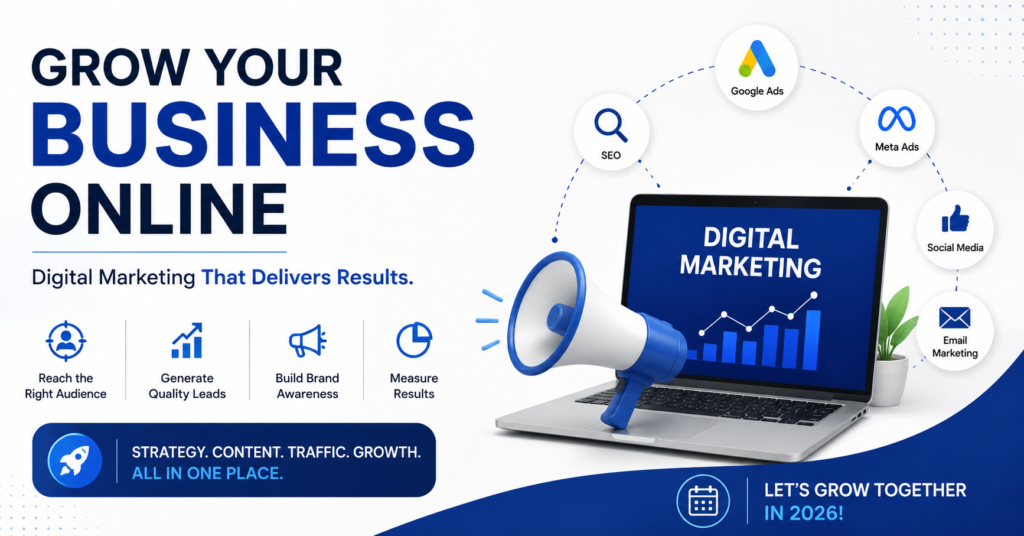

In today’s digital-first world, having a strong online presence is no longer optional for businesses. Customers are increasingly using search engines, social media, websites, and online reviews to discover products and services before making a decision.
This is where digital marketing plays an important role.
Digital marketing helps businesses connect with the right audience, build brand awareness, generate leads, and increase sales through various online channels. Whether you are a startup, small business, or established company, a well-planned digital marketing strategy can help you compete and grow in a highly competitive market.
What Is Digital Marketing?
Digital marketing refers to the promotion of products, services, or brands through digital channels such as search engines, social media platforms, websites, email, online advertising, and other digital platforms.
Unlike traditional marketing, digital marketing allows businesses to reach specific audiences and measure campaign performance more effectively.
Some of the major areas of digital marketing include:
- Search Engine Optimization (SEO)
- Social Media Marketing
- Google Ads and Pay-Per-Click Advertising
- Meta Ads
- Content Marketing
- Email Marketing
- Website Optimization
- Online Reputation Management
- Lead Generation
Why Is Digital Marketing Important for Businesses?
Consumers spend a significant amount of time online researching businesses, comparing products, reading reviews, and looking for recommendations.
If your business is not visible where your customers are searching, you may lose potential opportunities to competitors.
A strong digital marketing strategy can help you:
1. Reach the Right Audience
Digital platforms provide businesses with powerful targeting options. You can target audiences based on factors such as location, interests, demographics, search behaviour, and online activity.
This helps businesses reach people who are more likely to be interested in their products or services.
2. Build Brand Awareness
Consistent online visibility helps customers recognize and remember your brand.
Through social media, content, SEO, videos, advertisements, and other channels, businesses can communicate their brand message and establish credibility within their industry.
3. Generate Quality Leads
One of the biggest advantages of digital marketing is its ability to generate targeted leads.
SEO can attract people actively searching for your services, while platforms such as Google and Meta can help businesses reach potential customers through targeted advertising campaigns.
4. Increase Website Traffic
Your website is often the central point of your online presence.
Digital marketing strategies such as SEO, paid advertising, social media marketing, and content marketing can drive relevant visitors to your website.
More importantly, the goal should not simply be to increase traffic but to attract qualified traffic that has a genuine interest in what your business offers.
5. Measure Your Results
Traditional advertising can make it difficult to determine exactly how many people interacted with an advertisement.
Digital marketing provides access to measurable data such as:
- Website visitors
- Click-through rates
- Leads
- Conversions
- Cost per lead
- Engagement
- Advertising performance
- Customer behaviour
These insights allow businesses to understand what is working and where improvements are required.
Key Digital Marketing Strategies
A successful digital marketing campaign usually combines several channels rather than relying on just one.
Search Engine Optimization (SEO)
SEO focuses on improving a website’s visibility in search engine results.
A well-optimized website can attract organic traffic from people searching for relevant products, services, and information.
SEO generally involves areas such as:
- Keyword research
- On-page optimization
- Technical SEO
- Content creation
- Internal linking
- Website performance
- Local SEO
- Authority building
SEO is particularly valuable for businesses looking to build sustainable online visibility over time.
Social Media Marketing
Social media platforms provide businesses with opportunities to connect directly with their audience.
Businesses can use platforms such as Instagram, Facebook, LinkedIn, and other relevant channels to:
- Promote products and services
- Share educational content
- Build communities
- Generate leads
- Increase engagement
- Strengthen brand identity
The most effective social media strategy focuses on providing value rather than simply posting promotional content.
Google Ads and Paid Advertising
Paid advertising can help businesses reach potential customers quickly.
Search advertising is particularly useful when people are already searching for a product or service. Display, video, shopping, and remarketing campaigns can also be used depending on the business objectives.
However, successful paid advertising requires careful keyword selection, audience targeting, compelling ad copy, landing page optimization, and continuous performance monitoring.
Meta Advertising
Meta Ads can be useful for businesses that want to reach highly targeted audiences through platforms such as Facebook and Instagram.
Businesses can create campaigns focused on objectives such as:
- Lead generation
- Website traffic
- Brand awareness
- Engagement
- Sales
- Remarketing
The success of a campaign depends on factors such as audience selection, creative quality, messaging, offer, landing page, and campaign optimization.
Content Marketing
Content marketing involves creating useful and relevant content for your target audience.
Examples include:
- Blog articles
- Videos
- Infographics
- Guides
- Case studies
- Social media posts
- E-books
- Frequently asked questions
Good content can help businesses demonstrate expertise, answer customer questions, improve SEO visibility, and build trust.
Digital Marketing for Small Businesses
Digital marketing can be especially valuable for small businesses because it provides access to marketing channels that can be scaled according to available budgets.
Instead of trying to be everywhere, a small business should identify where its target customers spend time online and focus its resources there.
For example, a local service business may benefit from SEO, Google Business Profile optimization, Google Ads, and local social media marketing.
An e-commerce business may focus more heavily on SEO, social media advertising, shopping campaigns, email marketing, and remarketing.
The right strategy depends on the business, target audience, competition, budget, and objectives.
How to Create an Effective Digital Marketing Strategy
A successful strategy starts with clear goals.
Step 1: Define Your Goals
Determine what you want to achieve.
Your goal could be:
- More website traffic
- More leads
- More sales
- Better brand awareness
- Higher search visibility
- Increased customer engagement
Step 2: Understand Your Audience
Identify who your ideal customers are, what problems they have, what they search for, and how they make purchasing decisions.
Understanding your audience allows you to create more relevant campaigns and content.
Step 3: Choose the Right Channels
You do not necessarily need to use every digital platform.
Select channels based on where your audience is most active and where your business has the strongest opportunity to generate results.
Step 4: Create Valuable Content
Your content should answer questions, solve problems, educate customers, or help them make better decisions.
Useful content can strengthen your brand while supporting your SEO and social media efforts.
Step 5: Track and Optimize
Digital marketing should be treated as an ongoing process.
Review your data regularly, identify what is performing well, and make adjustments to campaigns, content, targeting, and budgets.
The Future of Digital Marketing
Digital marketing continues to evolve as technology and consumer behaviour change.
Artificial intelligence, automation, personalization, video content, voice search, analytics, and changing search experiences are influencing how businesses reach their customers.
Businesses that continuously adapt their strategies and focus on customer needs are more likely to maintain a strong digital presence.
The goal is not simply to follow every new trend. Instead, businesses should use technology and digital channels strategically to create better customer experiences and measurable business results.
Final Thoughts
Digital marketing is more than simply running advertisements or posting on social media. It is a complete approach to building visibility, attracting the right audience, generating opportunities, and developing long-term relationships with customers.
Whether you are launching a new business or looking to improve the online performance of an established brand, investing in the right digital marketing strategy can help you build a stronger and more competitive online presence.
Ready to grow your business online? A customized digital marketing strategy can help you identify the right channels, reach your target audience, and turn online visibility into meaningful business opportunities.